Aria Kianis’ work centers on material storytelling, communal histories, and socially engaged subjects. These works often invite interaction and become activated through audience participation.
Themes reflecting contemporary human experience emerge through sculptures that explore social structures, technological interactions, and global cultural movements. All with a sensitivity that humanizes the approach to these complex subjects and invites discussion with them.
Using glass, metal, stone, ceramic and wood, Kiani relates each medium to conceptual narratives, lending a voice to the subject. The processes unique to each material shape a language interwoven with the social and cultural histories of the craft. This fusion of disciplines creates a dialogue that resonates with contemporary events, material narratives connect timeless human emotions across eras, grounding them in the present by engaging with current events such as ‘Women, Life, Freedom’ movement seen in Iran, or social distancing laws experienced between 2022 – 23 in the UK.
Once activated at live events, these sculptural objects become catalysts for interaction and discourse. Performative, interactive, photographic, and video documentation elements of the work become a crucial part of the final piece, alongside the sculptural objects, as an active layer of the work.
“The breaking of a Kouze” Text.
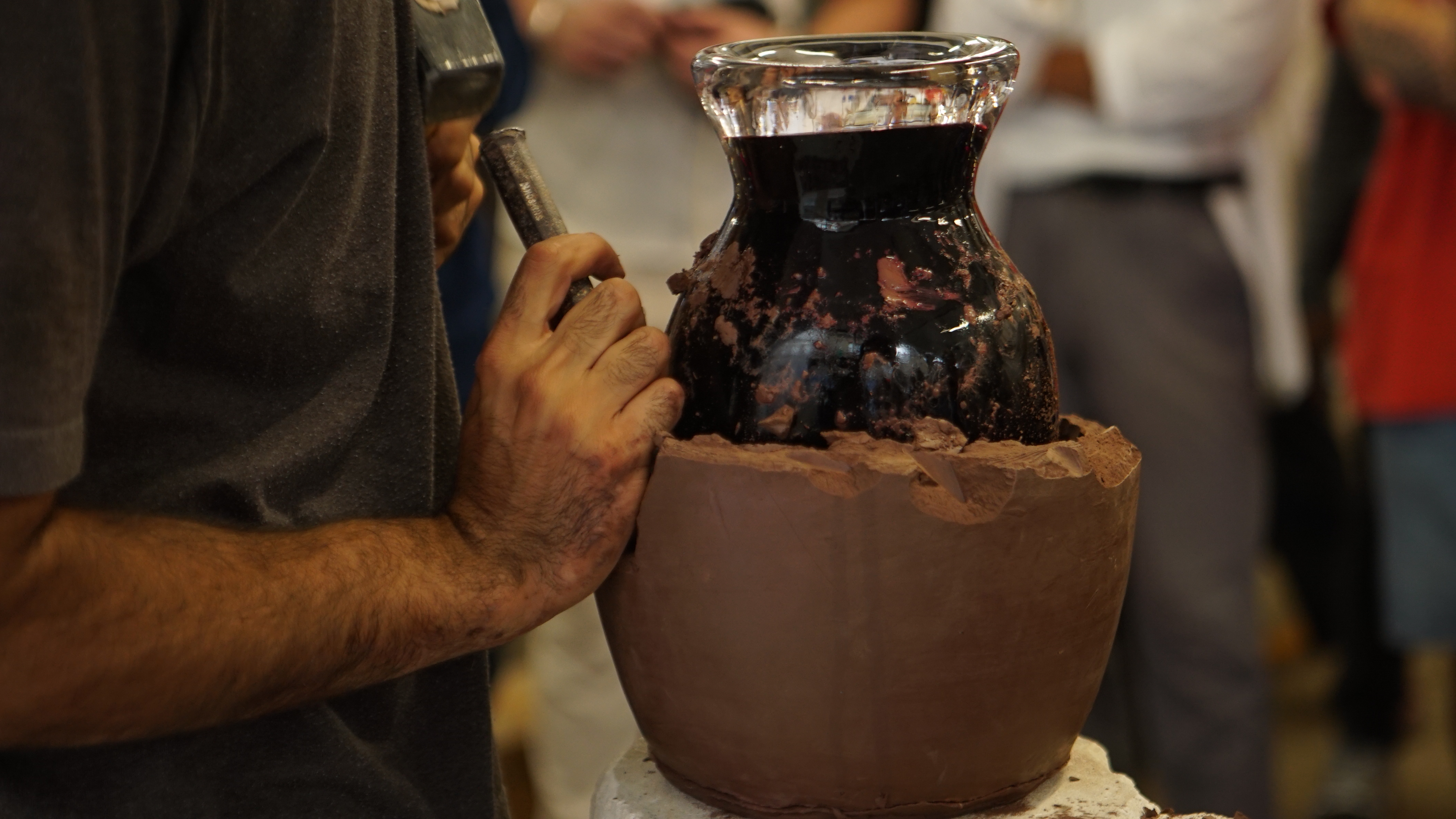
The breaking of a Kouze is a performative piece exploring feeling of social tension created by revolution, and the care required to save its potential. This is symbolized by carefully breaking an iconic Iranian ceramic vessel to release its encased glass counterpart, containing Shiraz wine, without shattering the whole.
This practice demonstrates the ethos of care for what’s within, and resonates within the contemporary ‘Women, Life, Freedom’ cultural revolution. Iran being one of the oldest wine making regions in the world, lost this part of its heritage in the 1979 revolution. Shiraz wine is synonymous with the displacement of Iranian culture and people; and reflecting Kiani’s own journey as a Shirazi born British citizen, amongst many.
At the base stands a burnt pillar of wood, copper, and sandstone, in the shape of the Simurgh from Zoroastrian mythology; showing the history of political and cultural changes in Iran. The vessels sitting atop the pillar are the contemporary action which shapes the future and eventually the next chapter of history.
Using mason’s tools, Kiani carefully chiselled away the ceramic, revealing a new form without sacrificing its potential. The precarious balance of not breaking the glass and spilling the wine creates a tense audience, akin to a country risking its cultural, infrastructure and stability for freedom.
